URL Shortener for Book Authors The Complete Guide
A book launch is one of the most link-intensive events in an author's professional life. In the weeks around a launch, an author is simultaneously promoting on social media, sending newsletters, appearing on podcasts, reaching out to book bloggers, distributing advance review copies, running pre-order campaigns, and sharing links to a book that may be available from a dozen different retailers, in multiple formats, across multiple countries. Every one of these activities involves a link, and how those links are structured determines whether the author can measure what is actually working.
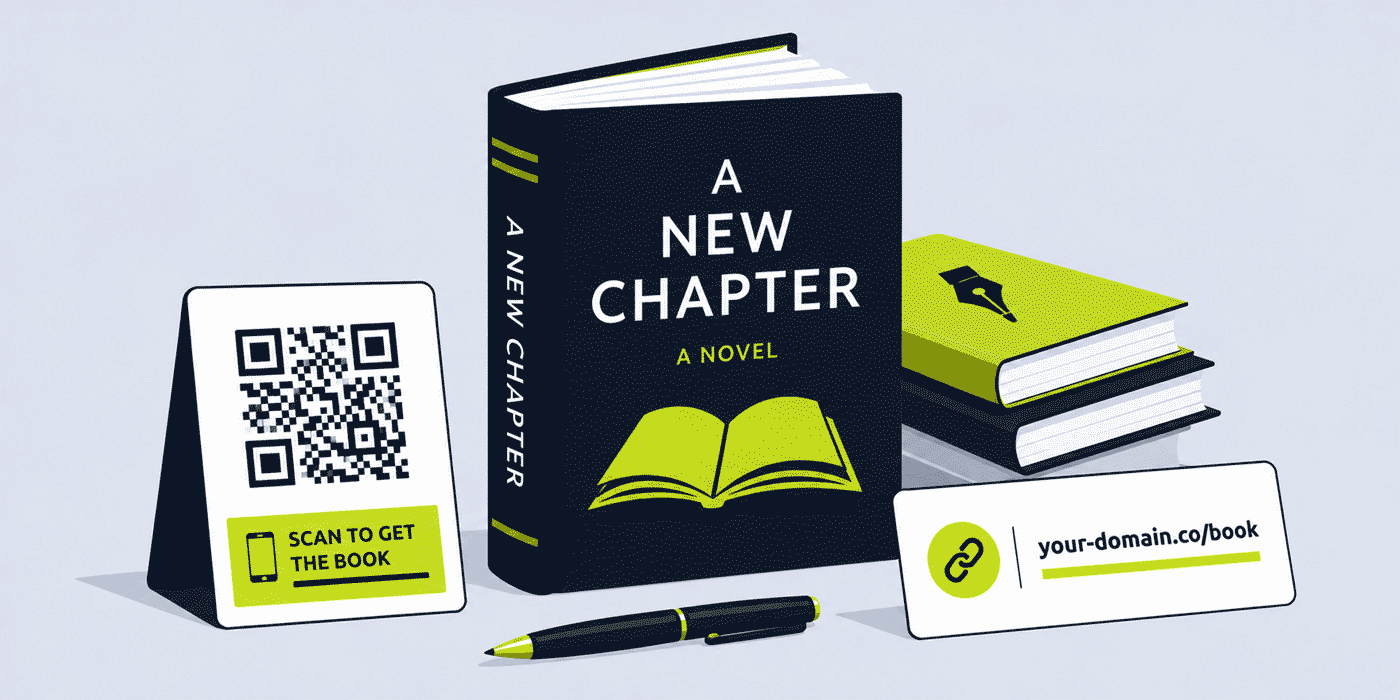
This guide covers how book authors — traditionally published and independently published, debut authors and established names with growing backlists — use a URL shortener, branded custom domain, Link in Bio and click analytics across every part of their book marketing. From the pre-order campaign to the launch day push, from ARC distribution to long-tail backlist promotion, from social media profile links to QR Codes inside printed books, link management is the layer that makes author marketing measurable without requiring a marketing team.
What This Guide Covers
- The author's link landscape — where links appear in book marketing and why they matter
- Universal book links and retailer aggregator pages
- Pre-order and launch-day link strategy
- ARC and review copy distribution links
- Social media Link in Bio for authors
- Per-channel attribution — tracking which promotion actually sells books
- Newsletter and email links for author mailing lists
- Podcast appearance and press coverage links
- QR Codes in printed books and author merchandise
- Backlist management — keeping older book links current
- A worked example: an author's link stack across a book launch
- Common mistakes with author book links
- A Cuttly plan guide for book authors
- Frequently asked questions
The Author's Link Landscape
Authors face a link management challenge that is different from most other content creators: they promote a product that is sold in many different places simultaneously, by sellers they do not control, on platforms with different tracking capabilities and different royalty structures. A reader who wants to buy a book might go to Amazon, Barnes & Noble, Bookshop.org, Apple Books, Kobo, their local bookstore's website, or any number of other retailers. An author who sends every reader to Amazon is potentially leaving sales from other retailers invisible and undercounted, while an author who shares links to every individual retailer creates a link-sharing burden that is unsustainable across every channel.
The standard solution is a universal book link or retailer aggregator page — a single page that presents all the purchase options for a book in one place, letting readers choose their preferred retailer. A short link pointing to this aggregator page can be shared everywhere, giving readers choice and giving the author a single, stable link that works regardless of which retailer the reader uses.
The second challenge is attribution. Author marketing spans many channels — newsletter, social media, podcast appearances, book clubs, review sites, press coverage — and retailers typically provide only total sales data rather than per-channel sales data. An author who uses a different short link for each marketing channel, all pointing to the same aggregator page, can see which channel is driving the most clicks to the purchase page, giving a channel-level measurement that retailer dashboards cannot provide.
Universal Book Links and Retailer Aggregator Pages
A universal book link is the most important single link in an author's marketing toolkit. It should be stable, branded, short, and descriptive enough that a reader who hears it mentioned in a podcast or sees it in a social media post understands immediately what it points to.
Structure and Naming
The simplest and most effective universal book link structure uses the author's own branded domain with the book title as the slug: your-name.com/book-title. This format works across every channel, is easy to say aloud in a podcast, is short enough for social media captions, and clearly communicates both the author and the book.
For authors writing series, a series-level link — your-name.com/series-name — pointing to the first book or to a page showing the full series order is useful alongside per-book links. A reader who discovers the series mid-run and wants to start from the beginning has a clean entry point, and the author can update the destination as new books are added to the series.
What the Aggregator Page Should Include
The destination behind a universal book link is typically an author website page or a service like Books2Read, BookLinker or a custom page on the author's site. This page should show the book cover, a brief description, and clear buttons or links to every major retailer where the book is available. For international authors, the page should ideally detect the reader's country and show country-appropriate retailer options first.
Because the short link is dynamic, the author can update the destination at any point — from a pre-order page before launch to the full retailer page at launch, or from one aggregator service to another if the author's website changes. The link shared on social media, in the newsletter, in podcast show notes and everywhere else never changes; only the destination behind it does.
Pre-Order and Launch-Day Link Strategy
The period from pre-order opening to launch day is the highest-activity window in any book's marketing lifecycle. During this period, an author is simultaneously running multiple campaigns, appearing on multiple platforms, and sharing links in contexts ranging from a podcast with a hundred thousand listeners to a personal Instagram story seen by a few hundred followers. Having a clear link structure before this period begins prevents the chaos of creating ad-hoc links for each new opportunity as it arises.
Pre-Launch Link Setup Checklist
Before a pre-order or launch campaign begins, an author should have the following short links created and ready:
your-name.com/book-title— the primary universal book link, initially pointing to the pre-order page, updated to the full retailer page at launchyour-name.com/newsletter— the same book link shared in email newsletters (separate for analytics)your-name.com/arc-title— pointing to the ARC download for reviewers (see ARC section below)your-name.com/links— the Link in Bio page for social media profiles, updated to feature the new book prominently
Additional per-channel links can be created for specific high-value appearances: a podcast with a large audience, a newsletter swap with another author, a BookTok promotion. These are created as needed rather than in advance, because the specific channels and opportunities for any given launch are rarely fully predictable weeks in advance.
The Dynamic Destination Advantage
The most practically useful aspect of a dynamic short link for a book launch is the ability to change the destination from pre-order to published-sale without changing the link itself. An author who starts promoting your-name.com/book-title twelve weeks before launch and has it appearing in interviews, podcasts, social media posts and newsletter archives does not need to update any of those appearances when the book goes live. The destination behind the link is updated on launch day, and every existing reference to the link automatically points to the live retail page.
ARC and Review Copy Distribution Links
Advance Review Copies distributed to book bloggers, Goodreads reviewers, BookTok creators and media contacts are a critical part of any book launch. Managing ARC distribution links well ensures that reviewers can access their copies easily and that the author can close ARC access cleanly once the book is published.
ARC Link Setup and Management
A short link pointing to an ARC download — via NetGalley, Bookfunnel, Prolific Works or a direct file host — gives the author a single link to share with all reviewers, regardless of which platform hosts the file. If the ARC file moves to a different host, or if the download URL changes, the short link destination is updated and every existing invitation and mention of the ARC link continues to work.
After the book is published, the ARC link should be redirected to the live book's retailer page rather than left pointing to a now-inaccessible ARC file. This keeps any archived ARC invitation emails, blog posts by reviewers that mention the ARC link, and old social media posts mentioning the ARC access link all pointing to somewhere relevant rather than a dead page.
Per-ARC-Platform Links for Analytics
For authors managing large ARC campaigns with multiple distribution platforms, separate short links for each platform — your-name.com/arc-netgalley, your-name.com/arc-bookfunnel — give click analytics per platform, showing which ARC distribution channel generates the most reviewer engagement. This data can inform decisions about which ARC platforms to use for future books and how much weight to give each in the marketing budget.
Social Media Link in Bio for Authors
Most social media platforms allow only one clickable link in a profile or bio. For an author with multiple books, an active newsletter, a website, and a current pre-order or launch campaign, this single link needs to serve all of these goals simultaneously. A Link in Bio page at your-name.com/links turns the single bio link into a small hub of tracked destinations.
A typical author Link in Bio page includes: the current book or latest release (highlighted at the top), links to each book in the backlist, a newsletter sign-up link, a website link, and any active promotion or giveaway. Each button on the Link in Bio page is its own tracked link, so the author can see which destination readers most want to reach from social media — information that helps prioritize what to feature prominently and what to move lower on the page.
Updating the Link in Bio Around Launches
In the weeks around a launch, the Link in Bio page should be updated to feature the new book prominently at the top, with a "Pre-Order Now" or "Buy Now" button as the most visible CTA. After the launch period, the page can revert to a more balanced backlist view. Because the Link in Bio page is a live page rather than a printed document, it can be updated immediately to reflect the author's current priority without any change to the bio link itself — which always remains your-name.com/links.
Per-Channel Attribution: Tracking Which Promotion Sells Books
The single most valuable insight most authors are currently missing is which marketing channel actually drives readers to click "buy." Newsletter sends, Instagram posts, TikTok videos, podcast mentions, review site features, BookClub recommendations — most authors promote across all of these without knowing which ones are worth the time invested and which have minimal measurable impact.
Per-channel short links give an author this data. For any launch or campaign, an author creates one short link per significant marketing channel, all pointing to the same book page:
your-name.com/nl-book— included in the newsletteryour-name.com/ig-book— used in Instagram bio and Story linksyour-name.com/pod-book— mentioned on a specific podcast appearanceyour-name.com/tiktok-book— linked from TikTok bio
Click analytics for each link, aggregated and anonymized, show which channel drives the most traffic to the purchase page. Over multiple launches, this data builds into a reliable picture of which channels are most effective for that author's specific audience — a picture that is worth considerably more than any general advice about "what works for authors" because it is specific to that author's readers.
Newsletter and Email Links
An author's email newsletter is typically their highest-converting marketing channel — readers who have opted in to hear directly from an author are significantly more likely to buy than readers who encounter the author through social media algorithms. The links in an author newsletter therefore deserve particular care.
Most email newsletter platforms provide their own click tracking for links within newsletters. An independent short link gives the author their own analytics on the same click — analytics that remain available regardless of which newsletter platform they use, which is particularly useful for authors who change newsletter providers (from Mailchimp to ConvertKit, or from ConvertKit to Beehiiv, for example). The click history for a short link follows the author across platform changes, where platform-specific analytics are lost when an account is migrated or closed.
Backlist Newsletter Links
For authors who regularly mention their backlist in newsletters — recommending older books to new subscribers, running backlist sales and promotions — a stable short link per book means the newsletter template can use the same links indefinitely without needing to check whether the retail URL behind them has changed. An author who sets up your-name.com/first-book once and uses it in every newsletter that mentions that title has a consistent, trackable link that never needs to be updated as long as the destination behind it is maintained.
Podcast Appearance and Press Coverage Links
Podcast appearances and press coverage are high-value marketing opportunities for authors because they reach audiences outside the author's existing follower base. They are also difficult to measure: an author who appears on a podcast typically has no direct way of knowing how many listeners actually bought the book after hearing the episode.
A short link mentioned during a podcast appearance — spoken clearly, kept short, ideally matching what will also appear in the show notes — gives the author independent click analytics for that specific appearance. Comparing click volumes across different podcast appearances gives a rough but useful indication of which shows drive listener action, which is more useful than reach numbers alone when deciding which podcasts to prioritize for future appearances.
For press coverage, a short link included in a press kit or mentioned in an author interview that gets published online becomes a permanent, trackable reference point. Click analytics on press coverage links, accumulated over time, give the author a sense of which outlets and coverage types drive ongoing traffic to their books long after the initial publication date.
QR Codes in Printed Books and Author Merchandise
Authors and publishers increasingly include QR Codes inside printed books — linking to bonus content, author websites, mailing list sign-ups, discussion guides for book clubs, companion resources, or the next book in a series. A QR Code inside a printed book faces the same challenge as any QR Code on a long-lived physical object: it needs to remain valid for the entire life of every copy of the book, which could easily be ten or twenty years.
A QR Code generated from a dynamic short link solves this entirely. If the author changes website platforms, switches mailing list providers, takes down a companion resource, or adds a new book to a series, the destination behind the QR Code is updated in the dashboard. Every printed copy of the book — including every copy already sold and sitting on a reader's shelf — continues to point to current content without any reprint.
For author merchandise — bookmarks, postcards, signed bookplate stickers, tote bags — a QR Code generated from a short link is more practical than a full URL, and remains valid across the lifetime of the merchandise regardless of changes to the destination. A bookmark included with a signed copy can link to an exclusive bonus chapter or a reader community group; a QR Code on a tote bag can link to the author's full catalog page. Both remain current without ever needing to be reprinted.
Backlist Management: Keeping Older Book Links Current
For authors with established backlists, link management is not only a launch-week concern. Older books continue to be discovered by new readers, promoted in newsletters, mentioned in podcast interviews about new releases, and linked from book club discussion sites. A link to a book published three years ago that now leads to a dead page or an outdated retail page is a lost sale and a poor reader experience.
A short link per book, maintained indefinitely, means that every historical reference to that book — in old newsletter archives, in review sites, in podcast show notes, in reader communities — remains functional. When a book goes out of print, the destination behind its short link can be redirected to the ebook version, to a used copy search page, or to the author's website with an explanation. When a book becomes available in a new format or at a new retailer, the aggregator page the link points to is updated.
A Worked Example: An Author's Link Stack Across a Book Launch
Consider an author using a branded domain such as your-name.com, connected through Cuttly's custom domain setup (an A record and a TXT record — see the custom domain setup guide).
Eight weeks before launch, the author creates the primary book link: your-name.com/new-title, pointing to the pre-order page on a retailer aggregator. This link goes into every mention of the new book from this point forward: the newsletter announcement, social media bios, a guest post on a book blog, and an interview in a local publication.
Six weeks before launch, ARC invitations go out using your-name.com/arc-new-title, pointing to the Bookfunnel download page. Reviewers receive this link in a personalized email. The author can see in aggregate how many people clicked the ARC link in the first week, giving a rough sense of how quickly reviewers are accessing their copies.
Two weeks before launch, a major podcast appearance is confirmed. The author creates your-name.com/pod-bookname for this specific appearance, which the host agrees to include in the show notes. After the episode airs, click analytics on this link versus the general newsletter link show the podcast driving approximately 40% of the click volume of the newsletter send — unexpectedly high for a first appearance, suggesting the author should seek more opportunities with that show or similar ones.
On launch day, the destination behind your-name.com/new-title is updated from the pre-order page to the full retailer aggregator. Every previous mention of the link now correctly leads to the live sale page. The ARC link is simultaneously redirected to the live sale page. No historical reference to either link needs to be updated.
Common Mistakes With Author Book Links
Sharing Direct Retailer Links Instead of a Universal Link
An author who shares an Amazon link in their newsletter is implicitly telling readers who prefer other retailers that they are on their own. A universal book link aggregating all retailer options is more inclusive, keeps the author from appearing to endorse any single retailer over others (which can be a consideration for authors who want to support independent bookstores), and is more stable since Amazon product URLs occasionally change or redirect incorrectly.
Creating a New Link for Every Single Mention
The opposite problem: an author who creates a completely unique link for every mention of a book across every channel ends up with an unmanageable link library where most links are used only once and analytics are fragmented across hundreds of entries. A clean structure — one permanent link per book, a small number of per-channel variations for significant channels, and a Link in Bio page for social profiles — keeps the library manageable and the analytics meaningful.
Not Maintaining Backlist Links After a Website Redesign
Every time an author moves their website to a new platform, migrates to a new hosting provider, or restructures their site's URL system, all the old links to their books break everywhere they appear on the internet. A short link per book that sits in front of the author's website URL means the short link remains valid regardless of what happens to the site behind it. The author updates the destination in the dashboard after the site migration; every external reference to the short link continues to work.
Cuttly Plan Guide for Book Authors
- The Free plan ($0) provides 30 short links per month, one branded custom domain, full click analytics, dynamic QR Codes and a Link in Bio page, with no credit card required. Sufficient for a debut author setting up their first book link, a newsletter link, an ARC link and a Link in Bio page for launch.
- The Starter plan ($12/month) adds 300 short links per month and 30 custom aliases per month — practical for an author with several books who runs regular newsletter promotions, manages multiple per-channel launch links, and wants to track backlist performance over time.
- The Single plan ($25/month) adds up to 5 branded domains, customizable QR Codes with the author's own branding, 1,000 API-created links per month and a full year of analytics history — relevant for a highly active author with a large backlist, multiple pen names requiring separate branded domains, or an author who produces merchandise with branded QR Codes.
- The Team plan ($99/month) suits author teams — an author working with a VA or marketing team — or independent publishers managing multiple author brands from a shared workspace with Campaign tag analytics for aggregated launch campaign reporting.
Create a free Cuttly account to set up your primary book link, your ARC link and your social media Link in Bio page. Registration is required for all plans, including free. No credit card is needed for the free plan.
Frequently Asked Questions
How do authors use short links for book launches?
Authors use short links during a book launch to create a single branded link — such as your-name.com/new-book — that points to a universal book page aggregating all retailer links in one place. This link can be shared consistently across every launch channel while the author tracks how many people clicked through from each source using separate per-channel short links pointing to the same aggregator page.
What is a good short link structure for an author with multiple books?
An author with multiple books benefits from a consistent slug structure: your-name.com/book-title for each book, each pointing to that book's retailer aggregator page. A Link in Bio page at your-name.com/links can aggregate links to every book in one place for social media profiles.
How do authors send ARC links to beta readers and reviewers?
Authors sending Advance Review Copies can share a short link — your-name.com/arc-title — pointing to the ARC download on NetGalley, Bookfunnel, or a direct file host. Because the link is dynamic, the author can close access after the ARC period ends by redirecting the link to the published book's retail page, so any reader who clicks the ARC link after launch day lands somewhere relevant rather than a dead link.
Can authors track which platform drives the most book sales?
Authors can use separate short links for each channel where they promote their book — your-name.com/newsletter-book for the email newsletter, your-name.com/instagram-book for the Instagram bio link, your-name.com/podcast-book for any podcast appearance — each pointing to the same retailer aggregator page. Click analytics, aggregated and anonymized, show which channel drives the most traffic to the purchase page.
How do authors use QR Codes in printed books?
Authors and publishers sometimes include QR Codes inside printed books linking to additional resources, an author website, a mailing list sign-up, or the next book in a series. A QR Code generated from a dynamic short link remains valid even if the author changes their website, switches mailing list providers, or publishes new books — without any need to reprint the book.
- Get Started
- Create Free Account
- Plans & Pricing
- Platform Tools
- URL Shortener
- Link Analytics
- QR Code Generator
- Link in Bio Builder
- Survey Tool
- Related Guides
- URL Shortener for Literary Publishers
- URL Shortener for Comic Book Creators
- URL Shortener for Podcasters
- URL Shortener for Newsletters
- URL Shortener for Personal Branding
- Encyclopedia
- Branded Links
- Link in Bio
- Setup Guides
- Custom Domain Setup
- Track Link Clicks
- Industry Hub
- Authors & Publishing
- All Industries →
URL Shortener
Cuttly simplifies link management by offering a user-friendly URL shortener that includes branded short links. Boost your brand’s growth with short, memorable, and engaging links, while seamlessly managing and tracking your links using Cuttly's versatile platform. Generate branded short links, create customizable QR codes, build link-in-bio pages, and run interactive surveys—all in one place.
Cuttly - Consistently Rated
Among Top URL Shorteners
Cuttly isn’t just another URL shortener. Our platform is trusted and recognized by top industry players like G2 and SaaSworthy. We're proud to be consistently rated as a High Performer in URL Shortening and Link Management, ensuring that our users get reliable, innovative, and high-performing tools.C


