URL Shortener for University Alumni Networks The Complete Guide
A university's relationship with its alumni is one of the most long-lived and commercially significant relationships in the higher education sector. It begins at matriculation, matures through the graduation ceremony, and ideally continues for decades through giving, volunteering, mentoring, attending events, and identifying with the university as a community they belong to and want to support. The alumni relations and advancement functions that manage this relationship communicate across an enormous range of channels and touchpoints: graduation ceremony programmes, reunion invitations, annual fund appeals, career mentoring platforms, events calendars, and legacy gift information packages.
This guide covers how university alumni relations offices, advancement teams, and alumni associations use a URL shortener, branded custom domain, dynamic QR Codes and click analytics across every major alumni engagement touchpoint: fundraising campaigns, reunion events, graduation ceremonies, mentoring programmes, legacy giving communications, and the long-term multi-channel effort to keep the alumni body connected and engaged with the institution.
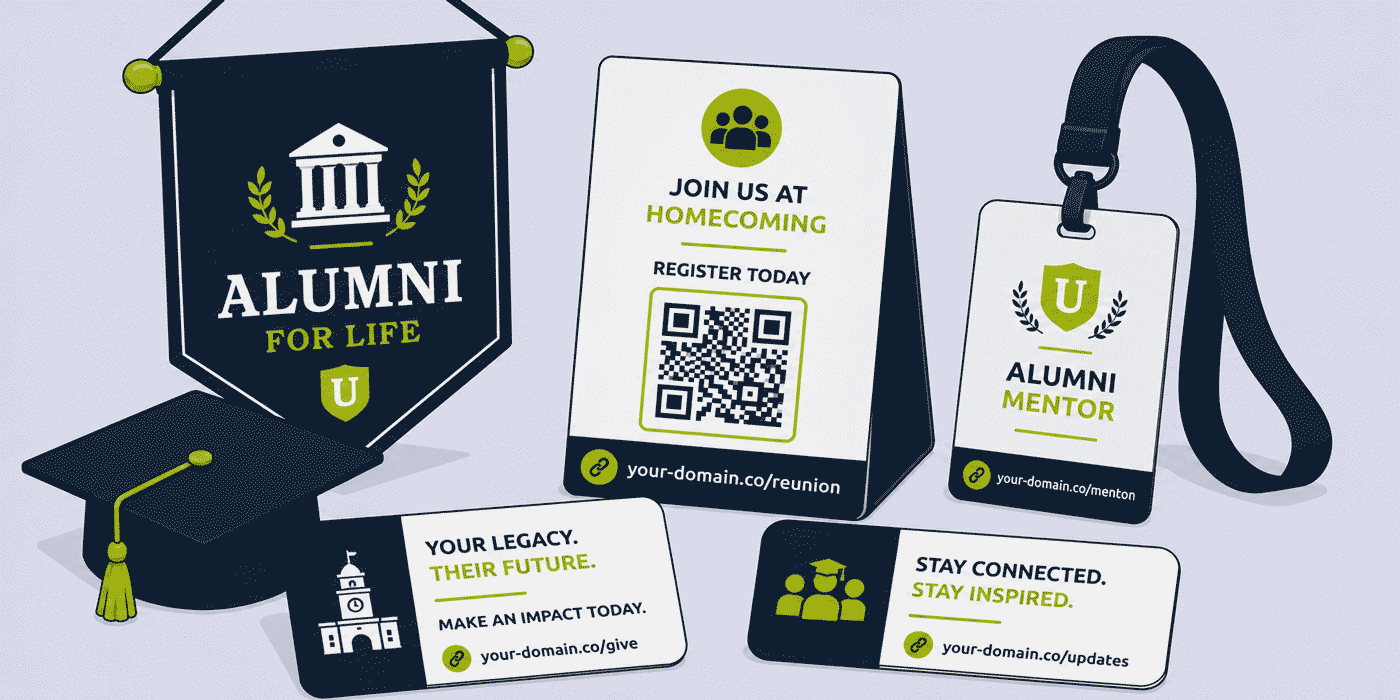
What This Guide Covers
- Why alumni relations link management is an institutional investment, not an operational detail
- Fundraising campaign links — annual fund, capital campaigns, per-channel attribution
- Graduation ceremony QR Codes — converting new graduates into engaged alumni
- Reunion event registration links — per-cohort engagement tracking
- Alumni community platform and directory links
- Mentoring programme links — connecting alumni with current students
- Legacy giving and major gift communications
- Regional alumni chapter event links
- Per-cohort and per-faculty engagement analytics
- A worked example: a university alumni office's link infrastructure across an annual giving campaign
- Common mistakes in university alumni link management
- A Cuttly plan guide for university alumni relations offices
- Frequently asked questions
Why Alumni Relations Link Management Is an Institutional Investment
University alumni relations operates at a time horizon that is unusual in most professional communication contexts: a giving relationship that begins with a first-year donation appeal may culminate in a major gift or legacy pledge twenty or thirty years later. The links that connect alumni to the institution — to the giving platform, to the community portal, to the events calendar, to the mentoring programme — need to remain functional and professional across this full relationship timeline. A broken link in a fundraising appeal email does not just cost a single donation; it introduces friction at a moment when the institution is asking for trust and generosity, and it may subtly affect the alumnus's impression of the university's operational standards at a time when operational standards are a proxy for institutional quality.
University digital infrastructure changes frequently over the years that span an alumni relationship: giving platforms change (from internal systems to third-party platforms and back), community portals migrate, CRM systems are replaced, and the alumni office's own website is restructured. Each of these infrastructure changes creates the risk of broken links in the vast archive of alumni communications — printed reunion materials, legacy information packs, fundraising campaign emails — that reference those systems. Dynamic short links on a stable branded domain are the most practical mechanism for managing this risk at scale.
Fundraising Campaign Links
The annual fund appeal is the most recurring and most widely distributed fundraising communication most alumni offices send. Whether it is a single calendar year campaign, a semester-based appeal, or a targeted Day of Giving with a matched gift window, it involves email distribution to the full alumni database, social media promotion, printed direct mail for alumni without active email addresses, and volunteer ambassador sharing by engaged alumni. Each of these channels deserves a short link, and the primary giving page deserves a branded short link that is stable across every platform migration the university's advancement function ever goes through.
Annual Fund Short Links
A permanent branded short link for the giving page — alumni.university.edu/give — is the primary fundraising link used across every channel in every campaign. This link appears in email footers year-round, in the alumni magazine, in event programmes, in printed materials sent to major gift prospects, and in any social media content that mentions the university's giving programme. Because it is permanent and dynamic, it survives every platform migration the giving system undergoes.
For specific campaign moments — a Day of Giving, a capital campaign launch, a scholarship appeal — campaign-specific short links track the performance of each distinct initiative:
alumni.university.edu/day-of-giving-2026— the annual Day of Giving campaignalumni.university.edu/library-appeal— a specific capital project appealalumni.university.edu/scholarship-fund— the endowed scholarship programmealumni.university.edu/hardship-fund— the student hardship bursary fund
Click analytics per campaign link give the development team a picture of which appeals generate the most donor engagement, separate from actual gift data. A campaign that generates high click volumes but low gift conversion may have an effective appeal email but a friction-creating donation page; a campaign with lower click volumes and higher conversion may be reaching a smaller but more highly motivated donor segment. These distinctions are visible only with click data alongside gift data, and they are the most actionable analytics available for improving campaign performance.
Per-Channel Fundraising Attribution
For major campaigns distributed across email, social media, direct mail, and volunteer ambassador outreach simultaneously, per-channel attribution links give the development team independent click measurement per channel:
alumni.university.edu/give-email— the email campaign send to the alumni databasealumni.university.edu/give-social— the university's organic social media postsalumni.university.edu/give-ambassador— links shared by volunteer alumni ambassadorsalumni.university.edu/give-print— the printed direct mail insert
Per-channel click analytics for a fundraising campaign reveal which distribution channels are generating the most giving page traffic. Over multiple campaigns, the pattern gives the development team evidence for where to invest in growing their distribution — whether volunteer ambassador programmes are worth expanding, whether social media is generating meaningful giving page engagement, and whether direct mail to older cohorts is generating proportionate traffic relative to its cost.
Graduation Ceremony QR Codes
The graduation ceremony is the single highest-attendance, highest-emotion event in the university's annual calendar, and it is the moment at which the institution's relationship with a new cohort of alumni formally begins. Every graduating student leaves the ceremony with a heightened sense of affinity with the university, an appreciation for what the institution gave them, and — in many cases — an emotional openness to the idea of remaining connected to and supporting that institution in the future. It is simultaneously the most powerful alumni engagement moment and the most underexploited one at most universities.
Graduation Programme QR Codes
A graduation ceremony programme carries QR Codes in multiple positions, each serving a distinct purpose:
- Alumni community sign-up. A QR Code on the inside cover or back page with the message "You are now part of our alumni community — join us." Destination: the alumni portal registration page. This is the most important QR Code in the ceremony materials: it converts the emotional peak of graduation into a concrete action that begins the formal alumni relationship. Short link:
alumni.university.edu/join. - First gift invitation. For universities that run a graduation-day giving campaign, a QR Code linking to a giving page with a message framed around what the university's support made possible for the graduating student. Short link:
alumni.university.edu/first-gift. - Photography and memories. A QR Code linking to the official graduation photography service or to a shared photo album the university has created for the ceremony. Short link:
alumni.university.edu/grad-photos-2026. - Career resources. A QR Code linking to the careers service's alumni resources, available to all graduates for a defined post-graduation period. Short link:
alumni.university.edu/alumni-careers.
Because graduation programmes are printed in a single batch for the full ceremony season and the QR Codes they carry are viewed both on the day and by families who take the programme home, dynamic QR Codes are the only practical approach: the graduation photography link, in particular, may need to be updated after the ceremony day when the professional photography becomes available, and the alumni platform sign-up link needs to remain functional indefinitely as family members find the programme months later.
Reunion Event Registration Links
Reunion events — the annual or biennial gatherings of a specific graduation cohort at the university — are among the highest-value alumni engagement activities the alumni relations office organizes. An alumnus who attends a reunion experiences an emotional reconnection with the university, with fellow students, and with the period of their life that the university represents. The propensity to give, to volunteer, and to engage with future alumni communications is significantly higher in the months following a reunion attendance than in comparable alumni who were invited but did not attend.
Per-Cohort Reunion Links
A per-reunion short link for each cohort's event registration — alumni.university.edu/reunion-2026 or alumni.university.edu/class-of-2001 — is used in the targeted email to that cohort, in any social media content specifically addressing that graduation year's alumni, and in any direct mail sent to alumni without reliable email addresses. Click analytics per reunion link show how much pre-event engagement each cohort's invitation is generating, which is a leading indicator of expected attendance well before the registration deadline.
Comparing per-cohort reunion link engagement across multiple reunion events builds into a dataset that is genuinely valuable for alumni relations planning: which graduation years have the most actively engaged alumni, which cohorts have lost touch with the university and may need a different engagement strategy, and which reunion formats — formal dinners versus informal drinks receptions versus campus tours — generate the most click engagement and subsequent attendance.
Alumni Community Platform and Directory Links
Most universities operate an alumni community platform — a portal where alumni can update their contact details, connect with other graduates, access career resources, register for events, and make donations. These platforms change over time as the technology landscape evolves: universities have migrated from in-house alumni management systems to commercial platforms such as Graduway, Anthology, Hivebrite, and others over the past decade, and will continue to migrate as better options emerge.
Each platform migration changes the alumni portal URL. A university that has published its alumni portal link across twenty years of correspondence — in printed alumni magazines, in university prospectuses that mention alumni benefits, in welcome packs given to students at matriculation, in graduation ceremony materials, in every email footer — faces an enormous broken link problem at every migration if those references used raw platform URLs rather than branded short links.
A permanent branded short link for the alumni portal — alumni.university.edu/portal or alumni.university.edu/community — survives every platform migration with a single destination update. The twenty years of published references to the alumni portal continue to work; the migration is invisible to every alumnus who uses those historical references.
Mentoring Programme Links
Alumni mentoring programmes — where experienced graduates offer career guidance, professional networking, and advice to current students and recent graduates — are among the highest-engagement alumni volunteer activities available. A successful mentoring programme benefits students, creates a meaningful connection between alumni mentors and the university, and builds the kind of deep engagement that correlates strongly with future giving and active alumni community participation.
Mentor Recruitment and Mentee Application Links
Two distinct short links for the mentoring programme serve the two audiences:
alumni.university.edu/mentor-signup— the alumni mentor registration page, included in communications to the alumni database inviting volunteer mentorsalumni.university.edu/find-mentor— the student and recent graduate mentee application page, included in careers service communications and current student communications
Click analytics on the mentor sign-up link, compared across different communication channels and different alumni segments (by graduation year, by faculty, by geographic region), show the alumni office which segments of the alumni body are most responsive to volunteer mentoring invitations. A faculty where alumni consistently engage with the mentor sign-up link at high rates may benefit from a more visible, publicly named "Alumni Mentor Network" branding for that faculty's community; one with low mentor engagement may need a different framing of the volunteer value proposition.
Legacy Giving and Major Gift Communications
Legacy and major gift fundraising involves the most personally significant and financially substantial donor relationships a university manages. An alumnus considering a legacy gift — a bequest through their will, an endowed scholarship in their name, a named building or programme — is making a decision that reflects decades of relationship with the institution and a considered view of how they want their financial legacy to be used. The communications that support this decision — legacy information guides, estate planning resources, named gift programme descriptions, impact reports on existing endowments — need to be professional, stable, and appropriate for the gravitas of the decision being supported.
A branded short link for legacy information — alumni.university.edu/legacy or alumni.university.edu/planned-giving — is used in personal correspondence from development officers, in printed legacy information packs distributed at donor events and sent by post to prospects, in the alumni magazine's legacy giving features, and in any communication specifically addressing the planned giving audience. Because legacy information resources are updated as the university's endowment structures evolve and as estate planning legislation changes, a dynamic short link ensures that any prospect who received a legacy information communication years ago and returns to the link later finds current information.
The branded domain is particularly important in legacy communications. A printed letter from the Vice-Chancellor asking an alumnus to consider a legacy gift that includes a generic shortener link is a jarring inconsistency in a communication that should convey institutional permanence and seriousness. The university's own branded alumni domain — on a link that the alumnus can trust is from the institution they knew for decades — is the only appropriate link format for this category of donor relationship.
Regional Alumni Chapter Event Links
Many universities organize regional alumni chapters that bring together graduates living in the same city or country outside the university's home location. These chapter events — networking drinks, cultural outings, academic lectures delivered by the university's faculty, and informal social gatherings — keep geographically distant alumni connected to the institution and to each other. Managing the links for regional chapter events requires a structure that is clear to each regional audience and that provides the central alumni office with per-region engagement data.
A per-region event link structure: alumni.university.edu/london-events, alumni.university.edu/new-york-events, alumni.university.edu/singapore-events. These links are used in the regional chapter's communications to alumni in each location, in the university's central alumni communications to alumni who have registered a specific region, and in any social media content promoting the chapter. Click analytics per region give the central alumni relations team a picture of which regional chapters are generating the most event engagement, informing where to invest in strengthening the chapter infrastructure.
Per-Cohort and Per-Faculty Engagement Analytics
Alumni relations teams at research-intensive universities manage relationships with hundreds of thousands of alumni across dozens of graduation cohorts and multiple faculties. Understanding which segments of this population are most actively engaged with the institution — which graduation years, which faculties, which geographic regions — is the most important analytics challenge in managing an alumni relations programme at scale. Per-cohort and per-faculty short link structures, applied consistently across all alumni communications, provide the engagement measurement layer that transforms alumni relations from an impressionistic practice into a data-informed one.
A systematic approach to per-cohort attribution: for the annual fund email campaign, each cohort-specific email variant (Class of 2000, Class of 2005, Class of 2010, Class of 2015, Class of 2020) uses a cohort-specific short link — alumni.university.edu/give-2000s, alumni.university.edu/give-2010s. Click analytics per cohort link show which graduation years have the highest engagement rates with the annual fund appeal, which years are declining in engagement over time, and which years are responding to which campaign framings.
Similarly, a per-faculty approach to mentoring, event, and community platform communications gives the alumni relations team a faculty-level engagement picture: if engineering alumni consistently show higher engagement with mentoring and events than arts alumni, the team can investigate whether this reflects a difference in the nature of the alumni population, in the quality of the faculty's alumni relations activity, or in the relevance of the university's offer for different alumni career trajectories.
A Worked Example: A University Alumni Office's Annual Giving Campaign
Consider a mid-size research university with 85,000 living alumni, running its annual giving campaign in November with a matched gift window, using a branded domain such as alumni.university.edu, connected through Cuttly's custom domain setup (an A record and a TXT record — see the custom domain setup guide).
Campaign structure: The annual fund link /annual-fund-2026 is the primary giving page link. Per-channel attribution: /give-email (email to 48,000 alumni with valid email addresses), /give-social (university social media channels), /give-ambassador (shared by 340 volunteer alumni ambassadors on LinkedIn and social media), /give-print (direct mail to 12,000 alumni without reliable email addresses). Day of Giving link: /day-of-giving-2026 for the 24-hour matched gift window.
Campaign analytics: Email generates 6,800 giving page clicks (14.2% open-to-click rate — strong performance indicating a well-crafted appeal email). Social media generates 1,240 clicks. Ambassador sharing generates 2,100 clicks (the second highest volume, achieved by 340 people versus the full email database). Direct mail generates 340 clicks from 12,000 pieces (2.8% response rate to a physical-to-digital QR Code scan — typical for older alumni demographics).
Day of Giving: The 24-hour matched gift window drives 4,200 clicks on /day-of-giving-2026. Click analytics show the peak click hour at 11am — the matched gift "only 12 hours remaining" social post drives a surge. The development team adjusts the social posting schedule for the following year to maximize urgency communications during peak engagement hours identified from this data.
Per-cohort analysis: Class of 2001 (25-year reunion cohort) shows 3.4x the email-to-click rate of the general alumni population, consistent with the elevated engagement seen in reunion years. The development team prioritizes the Class of 2001's relationship manager outreach for the following six months to capitalize on the heightened giving propensity that reunion engagement generates.
Common Mistakes in University Alumni Link Management
Raw Alumni Platform URLs in Printed Materials
A university that uses its alumni portal's native URL in printed materials — reunion booklets, legacy information packs, annual reports, magazine features — creates broken link risk at every platform migration. Given that alumni relations platform migrations happen approximately every five to ten years at most universities, and that some printed materials (legacy information packs, in particular) are designed to remain relevant for decades, the accumulated broken link risk from raw platform URLs in long-lived printed materials is substantial. Branded short links for all platform-referenced links are the only practical protection against this risk.
Single Giving Link for All Campaigns and Channels
A development team that uses a single giving link across all campaigns, all channels, and all communication types cannot distinguish which campaign is working, which channel is driving giving page engagement, or which alumni segments respond to which appeal framings. This is one of the most easily corrected information gaps in alumni fundraising practice: per-campaign and per-channel short links provide the attribution data that transforms campaign planning from pattern-matching to evidence-based decisions.
No Graduation Ceremony QR Code Strategy
A university that distributes graduation programmes without QR Codes linking to the alumni portal sign-up is missing the highest-intent alumni acquisition moment in its annual calendar. The emotional context of graduation — gratitude, pride, nostalgia, and genuine affection for the institution — creates a uniquely receptive audience for an alumni community invitation. A QR Code in the graduation programme that takes graduating students directly to the alumni portal sign-up captures this moment; the absence of one leaves it entirely to chance.
Cuttly Plan Guide for University Alumni Relations Offices
- The Free plan ($0) provides 30 short links per month, one branded custom domain, full click analytics, dynamic QR Codes and a survey tool, with no credit card required. Suitable for a smaller institution or a department-level alumni office setting up core giving, portal, and event links with basic campaign analytics.
- The Starter plan ($12/month) adds 300 short links per month and 30 custom aliases per month — practical for a growing alumni office managing multiple annual campaigns, per-cohort reunion links, graduation QR Codes, mentoring programme links, and regional chapter events throughout the year.
- The Single plan ($25/month) adds up to 5 branded domains for institutions managing multiple alumni brands or sub-brands (such as separate alumni associations for different faculties or graduate schools), customizable QR Codes for professional printed graduation and event materials, 1,000 API-created links per month for per-cohort automated link generation, and a full year of analytics history for multi-year campaign performance comparison.
- The Team plan ($99/month) suits large university advancement operations with development, alumni relations, events, and communications teams sharing link management, Campaign tag analytics for aggregated multi-campaign giving and engagement reporting, multiple branded domains for different alumni brands within a university group, and shared workspaces for distributed advancement teams.
Create a free Cuttly account to set up your alumni office's first giving campaign link, your alumni portal link, and your graduation ceremony QR Codes. Registration is required for all plans, including free. No credit card is needed for the free plan.
Frequently Asked Questions
How do university alumni offices use short links for fundraising campaigns?
A university alumni office creates a permanent giving page short link — alumni.university.edu/give — and per-campaign variants for specific appeals. Per-channel attribution links — email, social, ambassador, print — give the development team independent click measurement per channel. Over multiple campaigns, per-channel data informs which distribution mechanisms to invest in growing and which appeal framings resonate with which alumni segments.
How do universities use QR Codes at graduation ceremonies?
A university places QR Codes from dynamic short links in graduation programmes linking to alumni portal sign-up, first gift invitation, photography access, and careers resources. Dynamic QR Codes survive post-ceremony platform migrations and remain functional as families refer back to printed programmes. Click analytics measure new graduate digital engagement with the alumni community in the immediate post-graduation period.
How do alumni offices use short links for reunion event registration?
A university creates per-cohort reunion short links — alumni.university.edu/class-of-2001 — used in targeted email invitations, social media, and direct mail to that graduation year. Click analytics per cohort build insight into which graduation years have the most engaged alumni, which reunion formats generate the most interest, and how pre-event engagement predicts attendance across the reunion programme.
How do university alumni networks use short links for mentoring programmes?
A university uses separate short links for mentor sign-up and mentee application — /mentor-signup and /find-mentor — in alumni and student communications respectively. Per-faculty and per-cohort click analytics on mentor sign-up links show which alumni segments are most responsive to volunteer mentoring invitations, informing where to invest in strengthening the programme's recruitment messaging.
How do universities use short links for legacy and major gift communications?
A university advancement office uses a branded short link — alumni.university.edu/legacy — for all legacy giving communications: personal correspondence, printed information packs, and alumni magazine features. The branded domain is appropriate for the gravity of the legacy relationship; the dynamic destination ensures legacy information remains current as the university's planned giving programmes evolve over the decades of a donor relationship.
- Get Started
- Create Free Account
- Plans & Pricing
- Platform Tools
- URL Shortener
- Link Analytics
- QR Code Generator
- Survey Tool
- Related Guides
- URL Shortener for Non-Profits
- URL Shortener for Education
- URL Shortener for E-Learning Platforms
- URL Shortener for Corporate Training
- URL Shortener for Events
- Encyclopedia
- Dynamic QR Codes
- Branded Links
- Setup Guides
- Custom Domain Setup
- Track Link Clicks
- Industry Hub
- Non-Profit & Government
- All Industries →
URL Shortener
Cuttly simplifies link management by offering a user-friendly URL shortener that includes branded short links. Boost your brand’s growth with short, memorable, and engaging links, while seamlessly managing and tracking your links using Cuttly's versatile platform. Generate branded short links, create customizable QR codes, build link-in-bio pages, and run interactive surveys—all in one place.
Cuttly - Consistently Rated
Among Top URL Shorteners
Cuttly isn’t just another URL shortener. Our platform is trusted and recognized by top industry players like G2 and SaaSworthy. We're proud to be consistently rated as a High Performer in URL Shortening and Link Management, ensuring that our users get reliable, innovative, and high-performing tools.C


